


- WEBSITE -





Current location: HOME > NEWS > Frequently Asked Questions >
Key Precautions Before and After Operating a Double-Layer Roll Forming Machine
Time:2026-10-29 05:14:16 Author:xiangyi Click:173
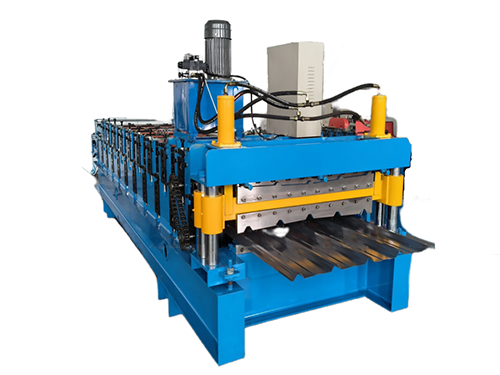
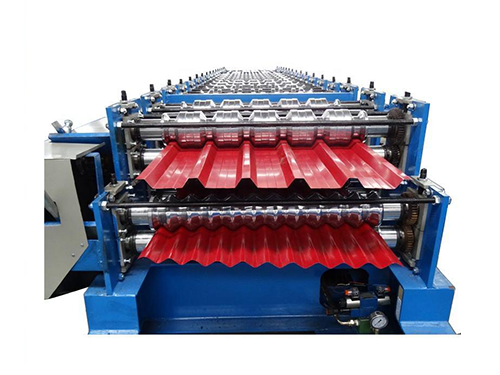
With a compact structure,a double-layer roll forming machine can simultaneously meet the production needs for two different profiles.This requires high standards for operational compliance and daily maintenance.Standardized pre-operation inspections and post-operation maintenance not only affect the accuracy of the finished profiles and the stability of equipment operation but also directly impact the equipment's service life and operator safety.
Personnel and Environmental Inspection Before Operation
Before officially starting the machine,operators must have received equipment training and be familiar with the machine's structure,control interface,lubrication points,and the location of safety devices.During operation,appropriate work clothes should be worn with cuffs buttoned,and long hair must be tucked into a cap.Loose items such as scarves or ties are strictly prohibited.Wearing gloves during equipment operation and manual feeding is strictly forbidden to prevent them from being caught by the rollers;however,protective gloves may be worn when handling steel coils or conducting environmental inspections.
The working area should be kept clean,dry,and well-lit.Aisles must not be cluttered with finished sheets,waste,or tools.Necessary safety warning signs should be set up around the equipment,and non-operating personnel are strictly prohibited from entering the operating zone.Oil spills on the floor should be cleaned promptly to prevent slipping or compromising operational safety.
Equipment Status Confirmation Before Operation
Before starting the machine,check whether the equipment base,anchor bolts,and frame connection bolts are tightened,and whether the transmission chains,gears,belts,and protective covers are intact.Ensure that all lubrication points have been filled with oil or grease as required,and that moving parts such as the shearing slide,gear rack,and chains are well-lubricated.
The hydraulic system must be checked to ensure the oil tank level is normal,there are no leaks at pipe joints,and the pressure gauge readings are stable.For the electrical system,verify the reliability of the power wiring,grounding protection,control cabinet switches,and emergency stop buttons.
The feeding rack,guide rollers,upper and lower guide rollers,molds,and roller surfaces should be cleaned thoroughly,with no residual metal chips,oil stains,or welding slag.Raw material sheets should be flat,without severe warping,hard spots,slag inclusions,welded edges,or rust,and the sheet thickness must not exceed the equipment's allowable range.
Test Run and Parameter Verification Upon Startup
After powering on,conduct a no-load test run first.Observe whether the main engine,hydraulic pump,chains,rollers,and shearing mechanisms operate smoothly without abnormal vibrations or noises.The rotation direction of the oil pump motor should match the equipment markings,and the hydraulic system should supply oil normally.
Before formal production,confirm whether the upper or lower channel is currently selected,and ensure that the mold,guide devices,and counter settings match the order specifications.Set the production parameters according to the sheet length,quantity,and speed.Test-run one or two sheets first to verify the finished dimensions,profile,cut position,and surface quality.Only proceed with continuous production after confirming that the quality is qualified.
In cold environments,the equipment should be properly preheated before startup.When the hydraulic oil viscosity is high,avoid running at high speeds immediately to prevent suction difficulties or abnormal noises in the pump.
Shutdown and Site Cleaning After Operation
After production is completed,stop feeding the material first,and wait until all remaining sheets inside the equipment have been fully discharged before shutting down.The normal shutdown sequence is generally to stop the main engine first,then turn off the hydraulic system,control power,and main power supply.If the equipment is equipped with a pneumatic system,close the air source and release the pressure.
After shutdown,promptly clean iron chips,oil stains,and debris from the feeding inlet,discharge table,rollers,molds,shearing blades,and the floor.Use dedicated tools for cleaning;it is strictly prohibited to insert hands into the rollers,molds,or shearing areas when the equipment is not powered off or has not completely stopped.
Finished sheets should be stacked neatly.They must not be stacked too high,placed at an angle,or occupy safety aisles.Waste,scraps,and packaging materials should be removed promptly to keep the site tidy and prepare for the next production run.
Lubrication,Tightening,and Maintenance After Operation
At the end of each shift,lubricate and maintain the shearing slide,chains,gears,and gear racks,and check for any looseness in locknuts,set screws,and bolts.
The hydraulic system should be regularly checked for oil level and quality.After a new machine has run for a period,the hydraulic oil should be replaced and the oil tank cleaned according to the manual.Subsequently,change the oil regularly based on accumulated working hours.The air filter,suction filter,and return filter of the oil tank should be regularly inspected,cleaned,or replaced to prevent impurities from entering the system.
The electrical components,including the control cabinet,motors,wiring,and buttons,should be inspected to ensure they are intact,avoiding moisture,aging,or poor contact.During prolonged shutdowns,apply anti-rust oil to the molds,rollers,and exposed metal surfaces,and take measures to protect them from rain and moisture.
By strictly implementing pre-operation inspections and post-operation maintenance,a double-layer roll forming machine can maintain stable forming precision and shearing quality,reducing common issues such as deviation,scratches,and dimensional errors.For overseas customers,clear and executable operation and maintenance procedures are also an important reflection of the equipment's safety,reliability,and user-friendliness.

CONTACTS
Contact:+86 15075795678
URL:www.xiangyirollformingmachine.com
ADD:Jiajializhuang Village, Bo Town, Botou City, Cangzhou City, Hebei Province, China