


- WEBSITE -





Current location: HOME > NEWS > Frequently Asked Questions >
What are the common types of fractures in fully automatic double-layer tile pressing machines?
Time:2026-08-08 09:42:23 Author:xiangyi Click:99
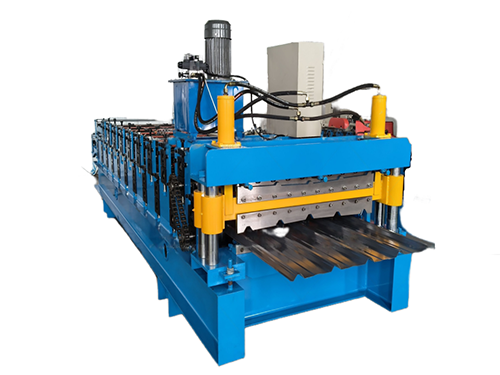
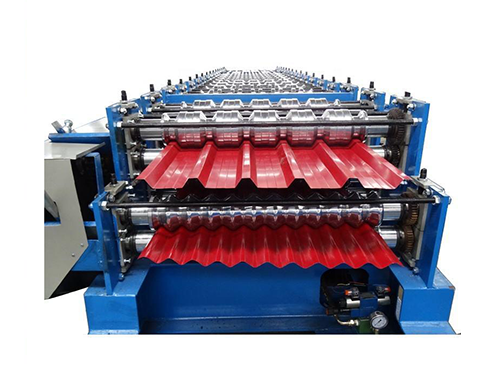
The main load-bearing components of the double-layer tile press are the transmission shaft, connecting rod, shear blade shaft, gear, chain, frame weld, and hydraulic shear mechanism. The fractures are divided into four categories: ductile fracture, brittle fracture, fatigue fracture, and environmental (corrosion) fracture. The most common ones on site are fatigue fracture and overload ductile fracture.
1. Resilient fracture (overload fracture)
Features: There is obvious deformation, twisting, and necking before fracture, and the fracture surface is rough and appears as dark fibers, which is caused by external forces exceeding the material strength limit.
Equipment prone parts: drive shaft, drive connecting rod, chain, frame crossbeam.
cause:
1) The incoming steel plate is excessively thick, and the hard material is forcibly pressed, resulting in an instantaneous overload;
2) The gap between the upper and lower rollers is too small, causing the machine to get stuck;
3) Double layer switching operation, forced startup due to staggered material jamming;
4) The screw is locked, the roller is stuck, and the motor is forcefully pulled and overloaded.
Phenomenon: The parts bend first and then break, not directly shatter.
2. Brittle fracture
Features: Almost no visible deformation, sudden fracture, smooth and shiny fracture surface, fast fracture speed, high risk.
Multiple locations: shearing blades, quenched gears, welded joints, castings.
cause:
1) Cold and brittle in low temperature winter;
2) Improper heat treatment can cause parts to become hard and brittle;
3) Welding defects, slag inclusion and porosity in welds;
4) Impact load: Steel plate hard joint impacts the shearing knife and the machine instantly.
Phenomenon: Good parts may break immediately upon startup without any signs of deformation in the early stages.
3. Fatigue fracture (with the highest proportion on site)
Characteristics: Long term repeated vibration, alternating stress, gradually producing microcracks, cracks gradually expanding, and finally sudden fracture; The fracture surface shows crack propagation patterns, splitting pattern sources, propagation zones, and instantaneous fracture zones.
Multiple locations: spindle, keyway position, connecting rod, bearing seat connecting bolt, frame weld, chain pin shaft.
cause:
1) The equipment operates continuously for a long time with high vibration;
2) Stress concentration at keyways and step corners;
3) Long term loosening of bolts and repeated impacts;
4) The double-layer equipment has two sets of rollers working alternately, resulting in a greater alternating load.
Phenomenon: The device has been running for a long time, and no problems can be seen in the early stage, but suddenly breaks during operation.
4. Environmental fracture (corrosion stress fracture)
Features: Corrosion and stress work together, slowly cracking, and high incidence of outdoor equipment use.
Multiple locations: frame welds, footings, exposed bolts, hydraulic cylinder welds.
Cause: Equipment placed outdoors, corroded by rainwater and moisture; Corrosion weakens the cross-section, and when combined with working stress, cracks occur.
Phenomenon: Cracks propagate outward from the rust pit point.

CONTACTS
Contact:+86 15075795678
URL:www.xiangyirollformingmachine.com
ADD:Jiajializhuang Village, Bo Town, Botou City, Cangzhou City, Hebei Province, China