


- WEBSITE -





Current location: HOME > NEWS > Frequently Asked Questions >
Reasons for structural damage and reinforcement techniques of edge biting forming machine
Time:2026-08-08 09:45:31 Author:xiangyi Click:153
Reasons for structural damage and reinforcement techniques of edge biting forming machine
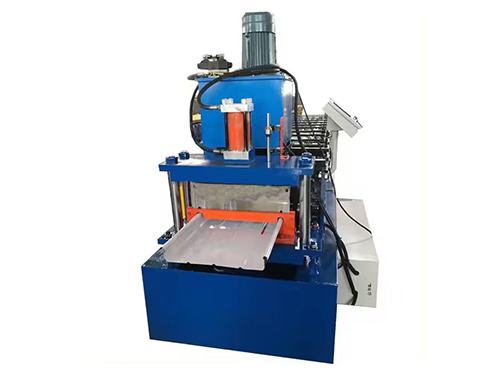
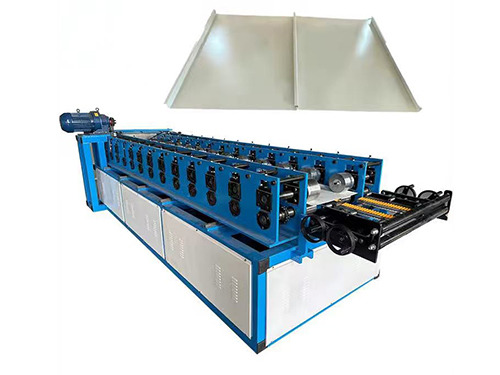
The main damaged parts of the vertical edge biting synthesis machine (low vertical edge, vertical locking edge pressing equipment) are the two side wall panels (vertical panels), roller seats, crossbeams, base frames, shaft seat supports, and welds; The failure modes are mainly fatigue cracking, frame distortion deformation, weld seam cracking, and support tearing, most of which are caused by insufficient design margin, welding residual stress, overload, and uneven foundation.
1、 Main causes of structural damage
(1) Design and manufacture innate factors
Insufficient thickness and rigidity of wall panels and rack panels
The thickness of the formed wall panels on both sides is relatively small, and multiple roller presses generate lateral force. After long-term repeated stress, the wall panels are stretched outward and deformed, the position of the shaft holes is deformed, and the coaxiality deviates, resulting in elongation and cracks in the shaft holes.
Welding defects and residual stresses
The welding of the frame and wall panels has not undergone aging stress relief, resulting in slag inclusion, incomplete penetration, and insufficient weld foot size in the welds; The welding heat affected zone becomes the starting point of cracks, and the weld seam gradually cracks after the equipment operates and vibrates. Many new machines crack after several months of use.
Design defects of stress concentration points
The installation holes, corners, and arc starting and ending positions of the shaft seat have no rounded transitions. Under the action of alternating biting forces, fatigue cracks originate from the edges and corners of the holes.
Low selection of profile materials
The rack uses inferior steel with insufficient yield strength, and plastic deformation occurs during the continuous molding of aluminum magnesium manganese and thick stainless steel plates.
(2) Reasons for use and operation (highest proportion on site)
Overloaded production
Processing exceeds the specified plate thickness of the equipment; Hard stainless steel and high-strength alloy plates are forced to form, and the lateral extrusion pressure of occlusion forming is doubled. The wallboard and roller seat bear far more than the design load, and bending and tearing occur.
Improper adjustment of roller gap
The gap is adjusted too small, causing the board to get stuck in the machine, and the instantaneous impact load directly acts on the wall panel and roller seat; Frequent dull car impact accelerates fatigue cracking.
The foundation of the foundation is uneven, and the rack is twisted
The equipment base is not leveled, the pad iron is missing, the ground settles, and the whole machine is twisted; The two side wall panels were forcibly twisted and misaligned, causing additional internal stress and gradually cracking.
Long term loosening of bolts, vibration amplification damage
The roller seat bolts, wall panel connection bolts, and foundation bolts have become loose due to vibration, resulting in increased impact during operation; The bolt hole is subjected to alternating compression, resulting in hole expansion and support tearing.
Transportation lifting damage
The unreasonable lifting force point caused hidden microcracks in the frame due to transportation bumps, which expanded and fractured after being put into production.
(3) Environment and fatigue damage
Long term continuous production, repeated alternating lateral forces on the rollers, fatigue cracking of wall panels and welds, no visible deformation on the appearance, and sudden cracking during operation.
Corrosion in outdoor workshops, thinning of welds and plates due to corrosion, and accelerated crack propagation due to stress corrosion.
2、 Targeted reinforcement and renovation technology
Divided into: crack repair and reinforcement, wall panel stiffness reinforcement, base frame reinforcement, support local reinforcement, and process matching protection
1. Repair and reinforcement of cracked welds (existing crack areas)
Thoroughly polish and remove the original cracks, creating a U-shaped groove until the cracks completely disappear. It is forbidden to simply repair the surface with welding.
Select matching welding rods, perform multi-layer and multi pass welding, control welding current, and avoid local overheating to generate new residual stresses.
Reinforcement plate added to the outer side of the weld seam: Thick reinforcement steel plates are attached to both sides of the crack weld seam, with plug welding and intermittent fillet welding. The thickness of the reinforcement plate is greater than or equal to the thickness of the original wall panel, which disperses stress and cannot be repaired solely by welding.
After repair, perform vibration aging or natural aging to release welding stress, and then reprocess the shaft hole to restore coaxiality.
2. Reinforcement of formed wall panels (vertical panels) on both sides (the most critical part)
The most common malfunction of the vertical edge interlocking forming machine is the outward expansion deformation of the wall panel.
Horizontal bracing reinforcement: Add horizontal tie rods/square tube braces up and down between the multi component rollers, rigidly hold the left and right wall panels, and counteract the lateral force of the formed board stretching outward; The pull rod is made of thick walled square tube, connected by flange bolts at both ends, detachable, and does not interfere with the roller changing and adjusting machine.
External reinforcement plate: The outer side of the wall panel is welded with triangular reinforcement plate and vertical reinforcement plate. The reinforcement plate extends from the base to the upper crossbeam to improve the bending stiffness of the wall panel and reduce bending deformation.
For equipment with insufficient wall panel thickness, if conditions permit, thicker lining plates can be welded, and the installation area of the shaft seat can be locally thickened to prevent the shaft hole from being squeezed and elongated.
It is prohibited to weld directly at the sharp corners of the wall panels. All corners of the reinforced panels should be rounded to eliminate stress concentration.
3. Overall reinforcement of the base rack
Add compartment reinforcement bars inside the base frame, and add cross and cross shaped reinforcement plates inside the box to eliminate base distortion and deformation.
The entire machine must be leveled at multiple points using shims to eliminate frame distortion stress; All anchor bolts are fully equipped and locked, and regularly tightened again; Fill the ground subsidence position with shims, and do not use anchor bolts to forcefully pull and level the frame.
A weak longitudinal beam with an outer sealing plate is added to improve its torsional performance.
4. Partial reinforcement of roller axle seat and bearing seat
Cracking in the installation position of the shaft seat: The bottom plate of the shaft seat is enlarged and thickened, and transition ribs are added to increase the stress area and avoid stress concentration in a few bolt holes.
Deformation of bolt holes due to expansion: After expansion, install thickened bushings, replace high-strength bolts above grade 8.8, and add anti loosening washers; Inspect and tighten bolts in each shift to prevent loosening and impact.
The connection between the shaft seat and the wall panel should be fixed using a combination of bolts and welding, rather than relying solely on welding to withstand alternating loads.
5. Reinforcement of crossbeam and connecting parts
The upper crossbeam is prone to bending due to the reaction force of the rollers. A sealing plate can be added to the top of the upper crossbeam to increase the moment of inertia of the cross-section; Add triangular reinforcement corner plates to the connection between the crossbeam and the wall panel to prevent tearing at the corners.
3、 Key points for use and maintenance after reinforcement (non-standard operation after reinforcement will still cause damage)
It is strictly prohibited to process beyond the thickness and material of the board; Aluminum, magnesium, manganese and stainless steel plates are tested in advance, and Tiktok encyclopedia is not forced to be produced in the car.
The gap between the rollers should be strictly adjusted according to the thickness of the plate, and it is forbidden to hold material when the gap is too small; Stop the machine immediately if the material is stuck, and do not forcefully start or pull it.
Weekly key inspection: Check for micro cracks in wall panels and welds; The fastening status of the roller seat, foundation, and cross brace rod bolts.
If it is found that the forming of the board deviates or the board shape is unstable, priority should be given to checking whether the frame is deformed, and do not blindly adjust the rollers.
Ensure rust prevention in outdoor workshops, regularly remove rust and paint key welds and reinforcing plates to avoid stress corrosion.

CONTACTS
Contact:+86 15075795678
URL:www.xiangyirollformingmachine.com
ADD:Jiajializhuang Village, Bo Town, Botou City, Cangzhou City, Hebei Province, China