


- WEBSITE -





Current location: HOME > NEWS > Frequently Asked Questions >
Analysis of the Roll Forming Process Principle for Color Steel Tile Machines
Time:2026-10-29 04:41:55 Author:xiangyi Click:166
Analysis of the Roll Forming Process Principle for Color Steel Tile Machines
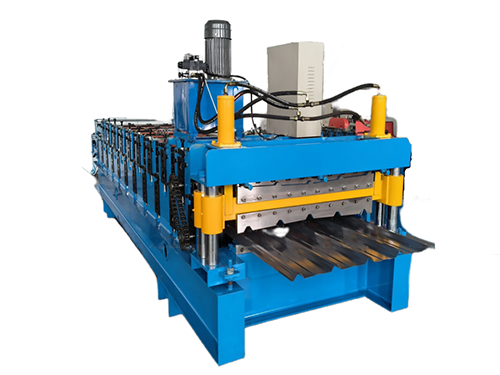
Roll forming in color steel tile machines is essentially a cold bending process:at room temperature,color-coated or galvanized steel sheets are continuously and progressively bent through multiple sets of forming rollers.The flat sheet is gradually shaped into a specified profiled board and then cut to a predetermined length to become the finished product.
Core Processes of Roll Forming
Feeding and Positioning
After being uncoiled and leveled,the color-coated or galvanized steel coil enters the production line.Guide wheels and tensioning devices ensure the sheet is centered and fed smoothly,preventing misalignment or scratches on the coating.
Multi-Pass Progressive Forming
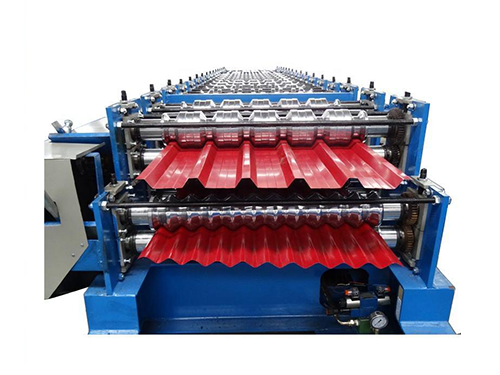
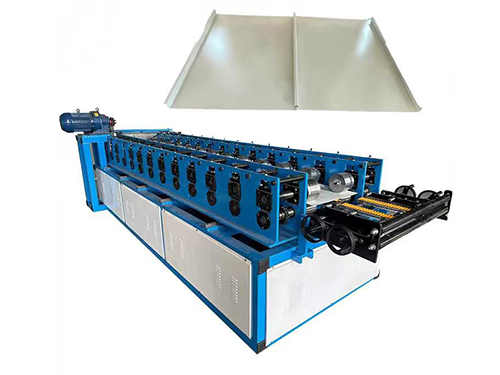
The sheet passes sequentially through multiple sets of upper and lower forming rollers.Each roller applies only a slight bending force,gradually shaping the cross-section to the target profile,such as Type 840,Type 900,or Type 910.
This"multi-pass,small-deformation"approach helps reduce stress concentration during forming,minimizing issues like springback,misalignment,tearing,or wrinkling on the sheet surface.
Friction Traction and Continuous Forming
The rollers are driven by a motor through a gearbox,chains,or universal joints.The sheet is pulled forward by the friction of the rollers and the compression from the roll gap.A variable frequency drive(VFD)adjusts the main motor speed,while a PLC controls the overall line speed,positioning,and process switching.
Progressive Stabilization of Cross-Sectional Shape
During the forming process,the sheet undergoes slight plastic deformation at the bent areas,which typically increases its yield strength.As a result,the finished tile profile exhibits better rigidity and load-bearing capacity.
Profiling and Cut-to-Length Shearing
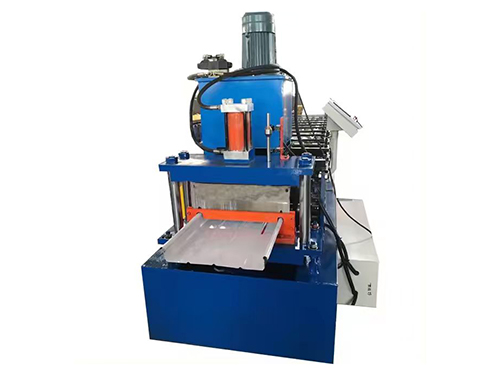
For standard roofing tiles,the sheet goes directly to the shearing station after roll forming.For products with pitched patterns,such as glazed tiles,a hydraulic profiling mold is used to press equidistant ribbed patterns,and a hydraulic cutter then cuts the sheet to the preset length.
Key Factors Affecting Forming Quality
Roller Design and Precision:The roll profile curve,roll gap,and surface hardness directly affect the flatness and dimensional stability of the tile profile.
Number of Forming Passes:The more passes there are,the smaller the deformation per pass,making the sheet less prone to wrinkling or springback.
Sheet Parameters:Sheet thickness,yield strength,and coating type influence the difficulty of forming and the degree of springback.
Tension and Guidance:Uneven feeding tension can lead to misalignment,wavy edges,or dimensional deviations.
Shearing Precision:The combination of an encoder for length measurement and PLC control determines the length tolerance of the finished product,which can typically be maintained within a millimeter-level range.

CONTACTS
Contact:+86 15075795678
URL:www.xiangyirollformingmachine.com
ADD:Jiajializhuang Village, Bo Town, Botou City, Cangzhou City, Hebei Province, China