


- WEBSITE -





Current location: HOME > NEWS > Frequently Asked Questions >
Common Issues and Solutions for Color Steel Tile Machines in Operation
Time:2026-10-29 04:42:54 Author:xiangyi Click:59
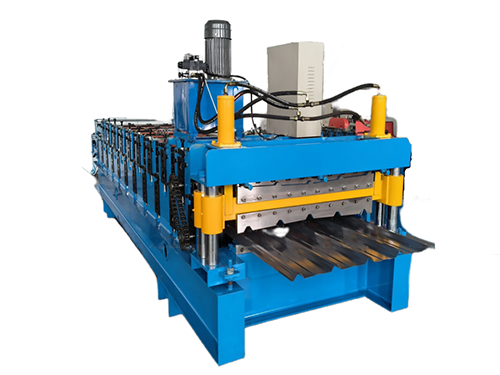
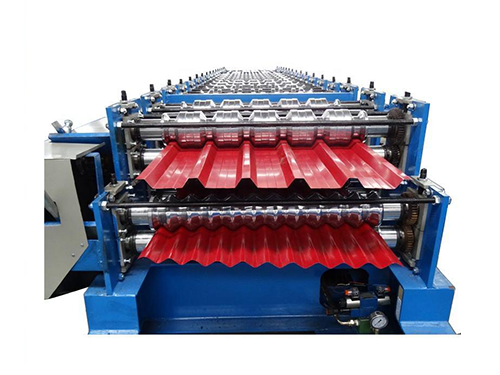
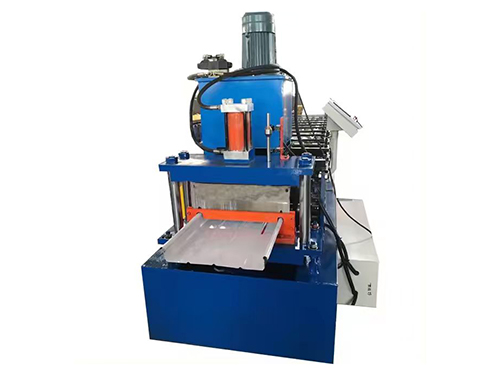
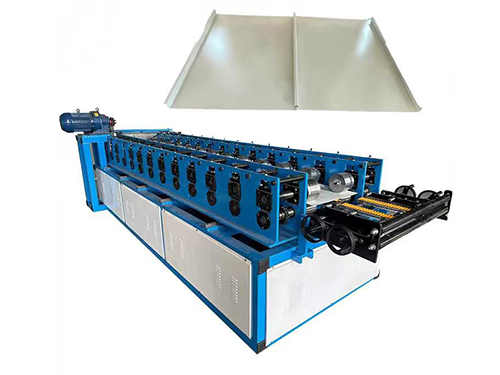
Color steel tile machines are widely used in projects such as steel structure workshops,storage warehouses,light steel villas,and prefabricated houses.The stability of the roll forming process directly affects the appearance,dimensional accuracy,and production efficiency of the finished tiles.During long-term operation,the equipment may experience issues such as surface scratches,wavy edges,sheet misalignment,inaccurate cut-to-length,and shearing abnormalities.In most cases,these problems are not caused by equipment damage,but rather by improper feeding conditions,roller gaps,hydraulic pressure,sensor positioning,lubrication,or parameter settings.Through standardized troubleshooting and timely handling,downtime can be effectively reduced to ensure continuous production.
Surface Scratches,Peeling,or Surface Damage
Surface scratches and peeling are usually related to roller cleanliness,roll gap size,and the condition of the sheet surface.When iron filings,dust,oil,or coating debris adhere to the rollers,they can scratch the sheet as it passes through.An excessively small roll gap,loose rollers,or worn roller surfaces can also increase friction.To resolve this,stop the machine to clean the rollers and check the feeding section for metal debris or hard objects.Then,adjust the gap between the upper and lower rollers according to the sheet thickness to ensure smooth passage without excessive compression.If the roller locknuts or bearing seats are loose,tighten them promptly.For severely worn rollers,grinding or replacement is necessary to avoid affecting subsequent forming quality.
Wavy Edges,Wrinkling,or Uneven Forming
Wavy edges and wrinkling are often caused by sheet misalignment,uneven tension,non-parallel roller shafts,or excessive deformation per pass.If the sheet is not centered before entering the main forming unit,or if the uncoiler and guide wheels are improperly positioned,excessive force on one side can cause wavy edges.Non-parallel roller shafts lead to uneven stress distribution and localized wrinkling.First,correct the uncoiler center and guide wheel positions to ensure the sheet feeds smoothly and centrally.Check if the feeding tension is stable,avoiding a coil that is too loose or too tight.If necessary,use a feeler gauge to check the roll gaps and adjust the parallelism of the roller shafts.For thinner sheets or those with softer coatings,reducing the forming speed and the reduction per pass can make the process smoother.
Profile Twisting,Warping,or Dimensional Instability
Twisting and warping are typically caused by misaligned roller centerlines,uneven left-right pressing,high internal stress in the raw material,or width fluctuations.If the roll gaps on the left and right sides are inconsistent,the sheet may be tighter on one side after forming,leading to warping.Check if the roller centerlines are aligned and ensure the left and right roll gaps are uniform.For color-coated or galvanized sheets with high internal stress,adjust the uncoiling and leveling status to reduce the impact of material deformation.If the sheet width deviation is too large,replace it with material of stable specifications and readjust the feeding guide.
Inaccurate Cut-to-Length
Inaccurate cutting is a common issue,mainly caused by encoder slippage,loose measuring wheels,pulse parameter deviations,or unstable conveying speeds.The machine measures length via an encoder or counter wheel.If the wheel does not maintain tight contact with the sheet,or if it is worn or deformed,counting will be inaccurate.Check if the counter wheel is pressed tightly and inspect it for deformation.If replacing the counter restores accuracy,the original one was faulty.If the length deviation is consistent,calibrate the length pulse parameters in the PLC interface to match the actual output.Also,check the drive chain and VFD speed stability to prevent speed fluctuations from affecting shearing precision.
Incomplete Cutting,Burrs,or Uneven Shearing
Incomplete cutting and burrs are usually related to blade sharpness,blade clearance,hydraulic pressure,and cutter seat positioning.Blades wear over time;dull edges can leave burrs or fail to cut completely.Excessive clearance between the upper and lower blades can cause the sheet to be squeezed rather than cut.Inspect the blades for chips or obvious wear,and grind or replace them if necessary.Adjust the blade clearance and overlap to ensure a clean cut.If hydraulic pressure is insufficient,check the hydraulic station pressure settings,cylinder operation,and solenoid valves.Perform a test cut with a short piece of material before continuous production to confirm a clean edge.
Shearing Blade Malfunction or Abnormal Movement
Blade failure to move up or down is often related to limit switches,solenoid valves,hydraulic oil levels,or electrical control.If the upper or lower limit switches are damaged,misaligned,or have loose wiring,the blade may fail to return to the upper limit,halting automatic operation.A stuck solenoid valve can also cause delayed or no movement.Check if the limit switches trigger normally and if the wiring is secure.If a solenoid valve is stuck,inspect the spool after powering off or shutting down the pump,and clean or replace it if necessary.Low hydraulic oil,reversed pump rotation,blocked oil lines,or relay failures can also affect shearing;check the oil level,pressure gauge,and control panel indicators one by one.
Auto Mode Failure or Inability to Run Continuously
Failure to start in auto mode is usually related to parameter settings,limit switch reset,manual/auto switches,or shearing counts.If the cut count reaches the set value without being cleared,the machine assumes the batch is complete and stops.Unset length/count parameters or an incorrect manual/auto switch position will also prevent auto mode.Clear the current count,reset the length and quantity,and ensure the blade has returned to the upper limit.Check the limit switch signals.Replace any damaged switches or start buttons.For PLC systems,verify that the input/output indicator lights are functioning normally to prevent program execution failures due to missing signals.
Equipment Misalignment,Unstable Feeding,or Increased Noise/Vibration
Misalignment and unstable feeding are often caused by an uncentered uncoiler,improper guide wheel positions,insufficient coil tension,or worn rollers.If the coil centerline does not match the main unit's centerline,the sheet will gradually drift to one side.Adjust the uncoiler center and guide wheels to keep the sheet centered.If noise increases,check the drive chain tension,bearing lubrication,gear meshing,and anchor bolts.A loose chain,lack of bearing grease,or unbalanced rollers can cause vibration and noise;tighten,lubricate,or replace the components promptly.
Motor Overload,Tripping,or High-Temperature Shutdown
Motor overload or tripping may be caused by excessively thick sheets,overly tight roll gaps,transmission blockages,unstable voltage,or electrical component failures.If the sheet exceeds the equipment's capacity or the roll gap is too tight,the motor may overheat due to increased load.Verify the sheet specifications and readjust the roll gap and forming speed.Check the transmission system for blockages and ensure the gearbox,chain,and bearings run smoothly.If voltage is low or unbalanced,check the external power supply and neutral wire connection.In summer,pay attention to the cooling of the control cabinet,hydraulic oil temperature,and motor temperature rise to prevent overheating shutdowns.
Daily Maintenance and Standard Operation Recommendations
To ensure long-term stable operation,establish a daily maintenance routine.Before each shift,check the hydraulic oil level,roller cleanliness,chain lubrication,and electrical connections.During operation,monitor the forming quality and stop the machine immediately if wavy edges,misalignment,or abnormal noises occur.After stopping,clean the rollers and shearing station to prevent metal debris buildup.Lubricate the drive chain,bearings,and guide rails periodically,and regularly check the hydraulic oil quality and filter elements.Adjustments to roll gaps,shearing parameters,hydraulic systems,and PLC settings should only be performed by trained personnel to avoid compromising forming accuracy or creating safety hazards.
Through standardized operation,timely troubleshooting,and regular maintenance,color steel tile machines can maintain high forming precision and production efficiency.For international customers,the equipment must not only possess stable cold roll forming capabilities but also feature clear troubleshooting paths and convenient maintenance methods.A robust structural design,reliable hydraulic shearing system,stable PLC control,and the ability to quickly replace wearing parts are all essential conditions for ensuring the long-term stable operation of the equipment in overseas markets.

CONTACTS
Contact:+86 15075795678
URL:www.xiangyirollformingmachine.com
ADD:Jiajializhuang Village, Bo Town, Botou City, Cangzhou City, Hebei Province, China